




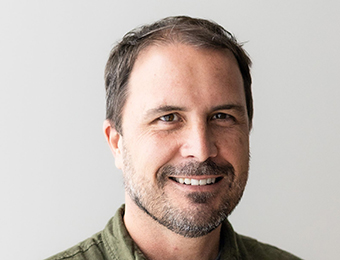
Ben Poulter awarded Copernicus Medal 2026
The Copernicus Medal 2026 has been awarded to Ben Poulter for his leadership in advancing the coordination of global efforts to model, monitor and measure greenhouse gas emissions and removals through his work with the Global Carbon Project's Global Methane Budget and the REgional Carbon Cycle Assessment and Processes study (RECCAP2), his implementation of the Committee on Earth Observation Satellites (CEOS) Global Stocktake strategic plan focusing on Agriculture Forestry and Other Land Use (AFOLU), and his influence in integrating greenhouse gas monitoring within domestic and international climate mitigation efforts.
Ben Poulter, PhD, is currently Senior Scientist for Greenhouse Gas Feedbacks at Spark Climate Solutions, where he leads their Warming-Induced Emissions program, which is helping to shape global understanding of how warming influences natural greenhouse-gas emissions from systems such as wetlands, wildfire and permafrost, and how improved monitoring and modelling of these feedbacks can inform climate policies. Prior to joining Spark, he spent nearly a decade at NASA's Goddard Space Flight Center, and in 2024, he served in the Biden Administration's White House Office of Science and Technology Policy (OSTP) as Deputy Director for Greenhouse Gas Measurements, Monitoring, Reporting, and Verification. He received his doctorate degree in 2005 from Duke University, in North Carolina, USA.
Ben has led field campaigns to measure greenhouse gas emissions (i.e., BlueFlux) and also contributed to major international scientific assessments and collaborations, including the Intergovernmental Panel on Climate Change (5th and 6th Assessment Reports), the U.S. Fifth National Climate Assessment, the Global Carbon and Methane Budgets, and the US Carbon Cycle Sciences Program. He has held positions at leading institutions in the United States and Europe, including as a Marie Curie Fellow at the Potsdam Institute for Climate Impact Research (PIK) and the Swiss Federal Research Institute (WSL), at the Laboratoire des Sciences du Climat et de l’Environnement in France, and in 2025, as the Johannes Geiss Fellow at the International Space Science Institute (ISSI) at the University of Bern.
He is currently Associate Editor for Global Biogeochemical Cycles and published the edited book 'Balancing Greenhouse Gas Budgets: Accounting for Natural and Anthropogenic Flows of CO2 and other Trace Gases'. For more information on Ben and his current international science and policy work his website can be found here.
More information on the Copernicus Medal.
Contact Media and Communications.